

This is the first letter in a series I am writing that presents the meanings, the benefits, the risks, the responsibilities, and horrors of the singular combination of fiat currency and global reserve currency that is the USD. I will space these out over the next many months.
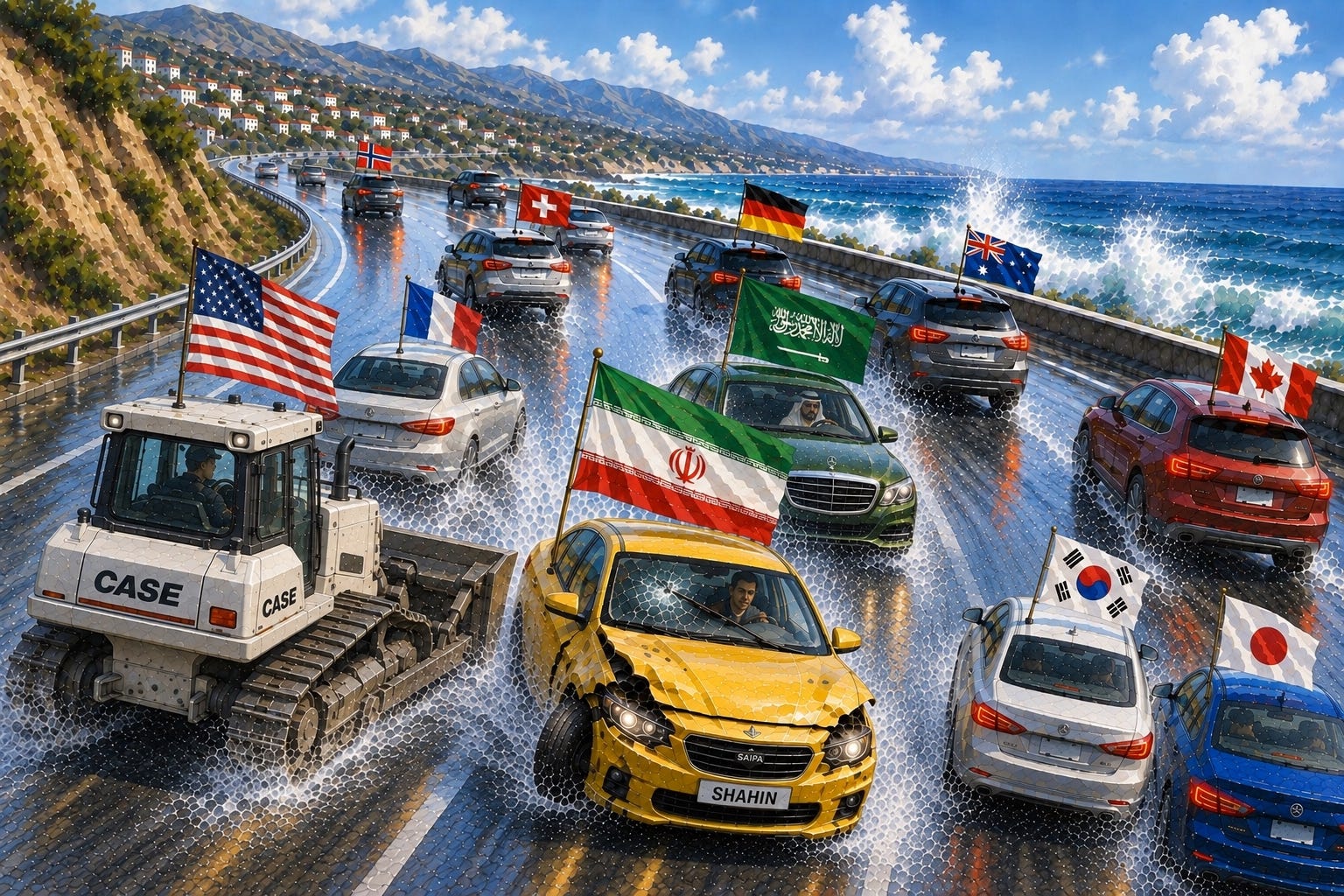
In August 1971, after a long romance, two machines mated.
The first machine
The first machine is fiat currency issuance. A government that prints its own currency transfers and concentrates economic wealth unto itself as much as it wishes, until people start laughing, shooting at it or slicing off its heads. Every government on earth runs this machine now. Zimbabwe ran it. Argentina runs it. The US runs it. It’s inflation.
Run it alone and the penalty shows up within a few years, irritating people because of the higher prices for goods and services and assets that result. Some also learn that this process of inflating tends to make asset holders wealthier and the working class poorer. Their trick is to inflate the currency slow enough that the frogs don’t realize they are boiling.
The second machine
The second machine is global reserve status.
The Federal Reserve declared its currency (the dollar) to be the reserve currency of the banks of the United States. It isn’t the reserve currency by popular acclaim or free market adoption, but rather by fiat—by command from the commanding heights, by the legal tender laws, by declaration, by assertion, supported by the demand that taxes be paid in dollars.
The power of the post-war US economy (meaning WW2), combined with the weakness of the rest of the world caused by WW2 and socialism, led to the dollar becoming not just the US reserve currency, but the global reserve currency. There is a whole lot more involved in becoming and staying the world’s reserve currency. We’ll discuss all that in this series of letters, but not today.
The dollar is the unit of account most of the world invoices in, the medium of exchange that clears most cross-border payments, the currency on one side of 89% of all foreign exchange transactions — a share that hasn’t changed much in twenty-five years. It’s the default denomination for corporate and sovereign debt issued by entities with no US operations whatsoever. And it’s a store of value central banks around the world rely upon. People trust that the US government will successfully extract taxes from its citizens, print new currency units, or borrow from others in order to service the current debt. It won’t go, officially, bankrupt.
Companies invoice in dollars because everyone else invoices in dollars. Half of world trade is priced in a currency issued by a country that accounts for a tenth of that trade.
The mating
Fiat currency issuance (inflation as we Austrian thinkers call it) working on its own, is subjected to some degree of external discipline—at least at the extremes—applied by the Foreign Exchange markets.
And reserve status alone, without the printing press, is just a currency other people like.
Mate the two together and the discipline mostly disappears. In August 1971, Nixon removed the last vestiges of the gold standard, leaving the United States in a position to run deficits and monetize them to a degree that would sink any other nation. (Monetizing means creating new currency units.) The US can do so because the world needs dollar assets as collateral and to engage in trade, and so swallows up the new currency units. This means there is less effect on prices than if the American citizen was asked to absorb it all on their own.
Treasuries aren’t merely a loan to the US government — they’re the base layer of global finance, rehypothecated through repo chains, held as high-quality liquid assets under banking regulations, and pledged and re-pledged by institutions.
Foreign demand for Treasuries is considered a vote of confidence in American governance. Some of it actually is. Fools. But much of it is demand for the one asset regulators everywhere require banks to hold.
Add the Eurodollar system — dollar credit created offshore by non-US banks—and you have dollars circulating that the Federal Reserve and the US banking system didn’t create. The machine has grown appendages the operator doesn’t control.
The petrodollar arrangement — Gulf oil priced in dollars, surpluses recycled into Treasuries and American weapons — developed over time in the 1970s. However the arrangement was created, it has frayed. Trump not coming to help Saudi Arabia address its Yemen situation might piss the Saudis off. Riyadh has flirted with yuan-denominated contracts for a decade but still settles most trade in USD, because switching invoicing currency is every bit as hard as switching which side of the road a country drives on. Technically possible, sure. Practically, everyone has to make the change together, and nobody wants to be driving the wrong way on the busy roundabout. But pissed off people will act in pissed off ways. So we will have to see how it shakes out.
Robert Triffin worked out in 1960 that a country supplying the world’s reserve currency must run deficits to supply it — and that supplying enough of it eventually undermines confidence in what was supplied. This topic might well get its own letter later in this series, because it grew ever more weird when the global reserve currency (the US dollar) became a floating abstraction in 1971, no longer tied to anything real.
What this buys, and what it costs
Run both machines, mated together, for long enough and you get seigniorage on a trillion dollars of hundred-dollar bills sitting in mattresses from Beirut to Buenos Aires — an interest-free loan from foreigners. It allows for lower borrowing costs (interest) on $40 trillion of debt. It provides the ability to freeze another country’s reserves, as happened to Russia in 2022 and Iran now. This is a payment system converted into a weapon that works once or twice. Then everyone else starts building a bypass.
The arrangement has a cost. It shows up as gradually decreasing purchasing power of whoever holds the currency while the printing press runs — which is nearly everyone, by default. And it shows up in the expanding power of the US government.
Of course, their own country’s fiat currency is likely debasing faster than the USD. Because most countries are printing away. The US just gets away with it more than others.
There are winners and losers in this giant game that has, for a century, increased the power of the US government. It’s a story filled with conspiracies, political shenanigans, cronyisms, regime changes and enormous ill-gotten wealth. This series of letters will be fun to write.
The combination of fiat currency and global reserve currency is unusual indeed. It gives the issuer powers that neither machine possesses by itself. Over the coming letters (intermittently spaced over many months), we’ll look more at what those powers are, who benefits from them, who pays for them, why the system persists, and what happens when confidence in either machine begins to fail.
Because it is indeed a confidence game. And the jig is nearly up. And we need to understand the game in order to win. Or at least not lose. Join us in that process by subscribing or upgrading to premium status.
Sincerely,
John Hunt, MD
Editor, Doug Casey’s Crisis Investing
Central banks are dumping dollars and hoarding gold at the fastest pace in history.
the makings of an historic book in this piece. A book that needs to be written. Perhaps a Roman historian already wrote the book. The interplay of fiat and reserve asset is critical. As a frog, I feel cooked.
"Because it is indeed a confidence game. And the jig is nearly up" - a currency is 100% dependent on confidence, and when that confidence is undermined, the currency collapses and the country soon follows.
Deeply insightful John - please keep educating us.