
The War Came Home
Spirit Airlines Was the First Major American Casualty. It Won't Be the Last.

This past weekend, Spirit Airlines stopped flying.
If you’ve spent any time in a U.S. airport over the past decade, you know Spirit. The bright yellow planes. The $39 fares. The one your college kid took home for spring break and your in-laws used because the Christmas trip wasn’t going to pay for itself in business class. It wasn’t fancy. But it worked. And for tens of millions of Americans who couldn’t afford the alternative, it kept air travel within reach.
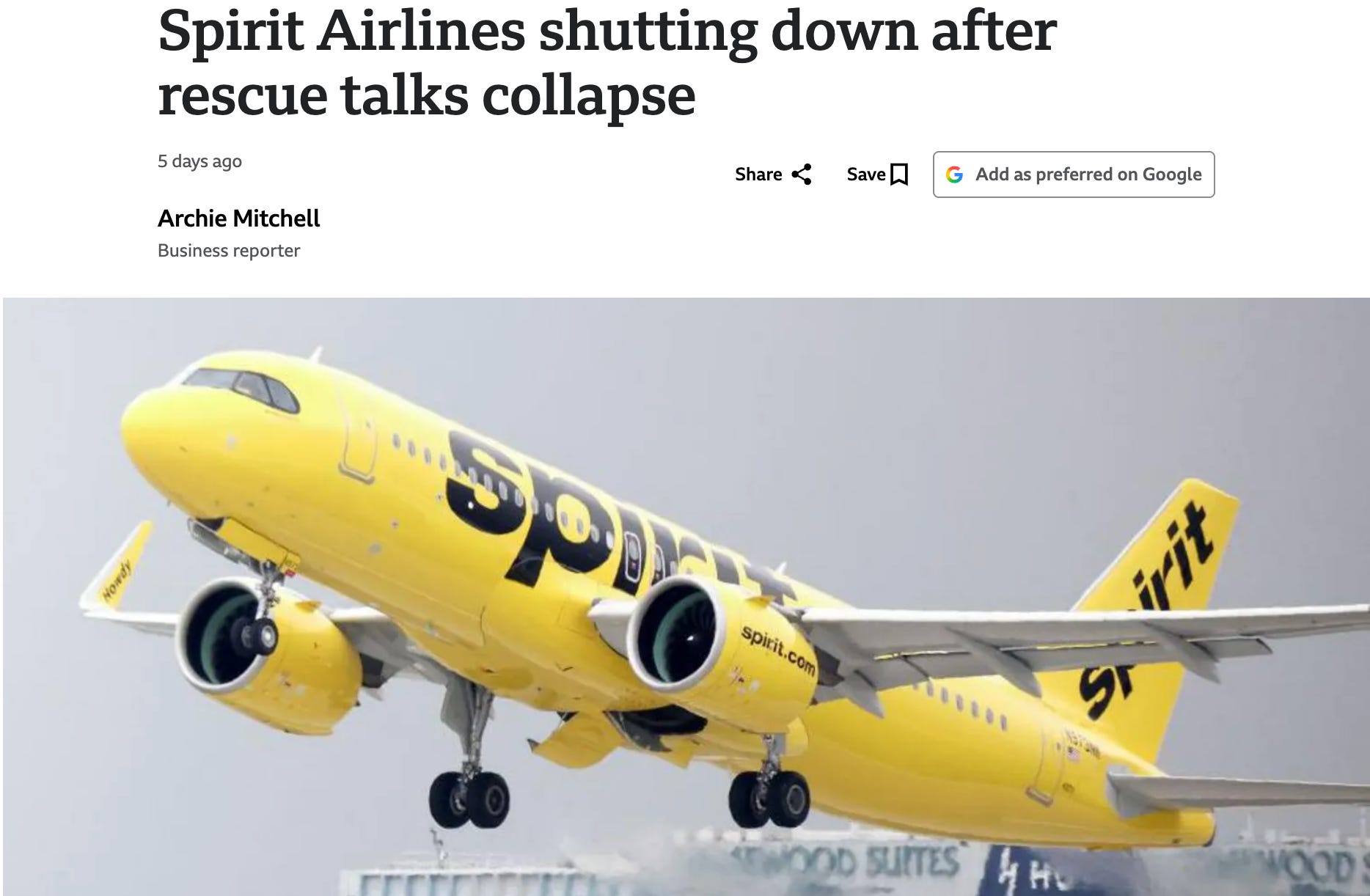
Now it’s gone. Seventeen thousand people lost their jobs overnight.
Officially, Spirit went down on long-running financial troubles — bad management, a failed JetBlue merger, the structural pain of the budget-airline model. All true. The company had been wobbling for years.
But wobbling is not dead. What pushed Spirit over the edge was crude above $100 and jet fuel — refined directly from crude — going right along with it. On margins as thin as a budget airline runs, a sustained 40% jump in your single largest input cost isn’t a headwind. It’s a guillotine.
So really, what killed Spirit Airlines was the war.
Two Americas
And yet, if you were sitting at a trading desk in Manhattan today, you’d hardly know any of this happened.
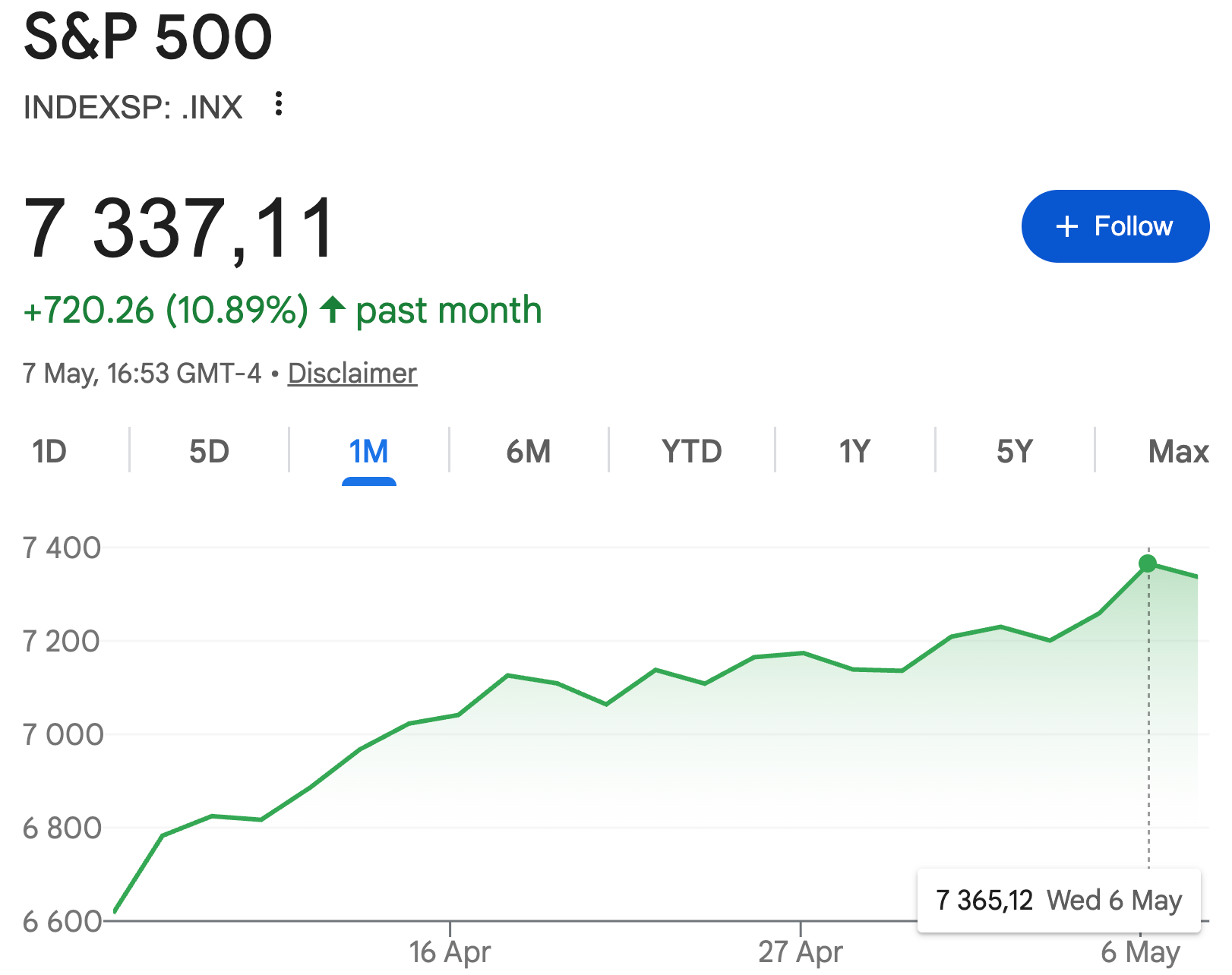
The S&P 500 — the headline number Wall Street treats as the economy — just printed an all-time high. Over 7,300. Up roughly 11% in the past month alone.
The Shiller P/E ratio (basically a long-term measure of how expensive stocks are relative to actual earnings) sits at 41 — the second-highest reading this measure has ever recorded, beaten only by the dot-com peak of 2000. As I told you in a recent essay, every single time this ratio has held above 30 for more than two months, the market has dropped between 20% and 89%. No exceptions. And of course, we’re way past two months.
Meanwhile, in real America — the one that doesn’t sit in front of a Bloomberg terminal — the picture looks nothing like that.
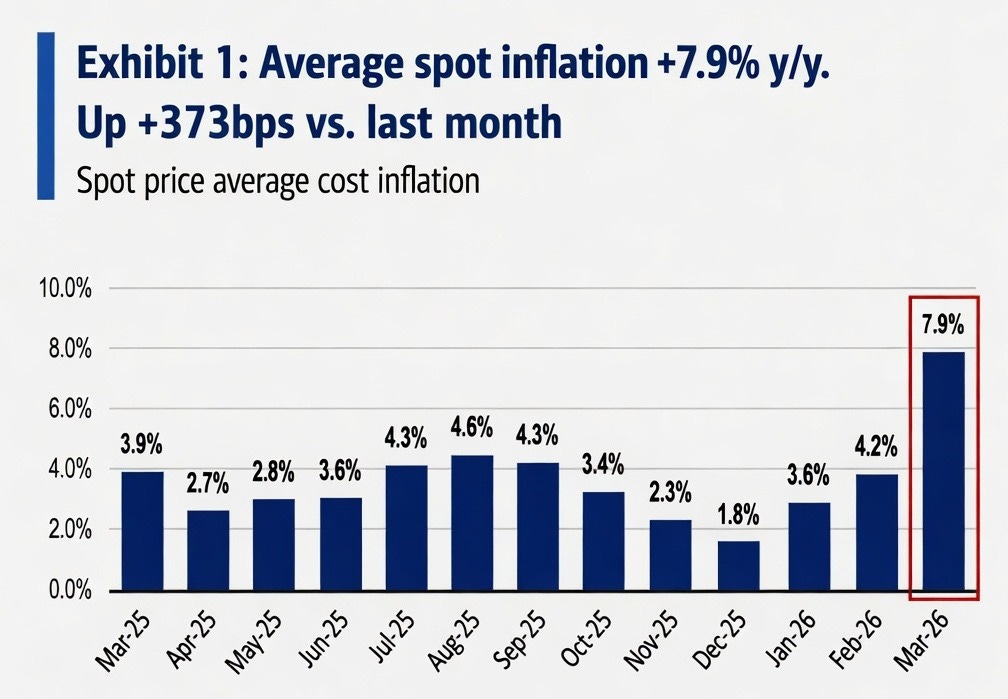
For starters, U.S. food inflation recently hit 7.9% year over year. Tomatoes up 102%. Vegetables up 90%.
The average gallon of gasoline is at $4.44 — up 40% in twelve months and the highest in three years. Diesel at $5.64 is within a hair of the June 2022 all-time record.
And mortgage rates, which had quietly drifted back below 6% in February (refinances were finally starting to make sense again), reversed in a single week when the war broke out. The 30-year fixed is back above 6% — and climbing. The refi window that millions of homeowners had been waiting on for two-plus years just slammed shut.
All of that was already happening before Spirit went down.
What Comes Next
Now, the question — is any of this on track to ease up?
In a word, no. If anything, the opposite.
Earlier this week, the Pentagon launched something called “Project Freedom” — 15,000 troops, guided-missile destroyers, over 100 aircraft, all to escort commercial ships through the Strait of Hormuz. The first convoy ran on Monday. Iran responded with cruise missiles and drones.
Within 36 hours, the operation was over.
Now, the reason it ended was bigger than the operation itself. Saudi Arabia, the country that has hosted American troops for decades, told the U.S. military it could no longer use Prince Sultan Air Base or Saudi airspace to run the operation. Kuwait did the same.
Bad enough that France, Japan, Malaysia, the Philippines, and Thailand — all U.S. treaty allies — had already been negotiating Hormuz passage directly with Iran, paying in yuan through a Chinese bank. But when your closest partner in the region tells your military to leave? That’s the room telling you it’s over.
Now, the headlines will keep oscillating in the days ahead — strait open, strait closed, ceasefire offered, ceasefire collapsed. There will probably be more Project Freedoms and more 36-hour wins. None of it changes the underlying reality: the strait is not opening on any timeline that matters. It’s the kind of quagmire Trump is almost certainly regretting by now.
Of course, the problem here is that Hormuz isn’t just oil. It isn’t even just oil and LNG. It’s also the artery through which roughly half of the world’s seaborne fertilizer trade flows. The price of urea — the main input in nitrogen fertilizer — has more than doubled since February. Ammonia is up sharply too. Farmers across the Northern Hemisphere are making planting decisions right now at fertilizer costs nobody budgeted for.
That part hasn’t fully shown up at the grocery store yet. Fertilizer leads, food lags — by months, not days. But the damage is already locked in.
So if you think nearly 8% food inflation and an American airline going bankrupt is bad, just give it a few more months.
Regards,
Lau Vegys
P.S. We’ve published our latest issue of Crisis Investing, with two new picks. If you're a paid subscriber, make sure you haven't missed it. And if you're not yet on the paid side, the lead — featuring Doug Casey’s latest words of wisdom — is free to all.
Lau,
We really all need to seriously consider that the pointy shoe crowd and the inner circle in DC have not got a clue about the consequences of their actions, both within the US and more importantly in the rest of the world.
Ginger man has potentially sentenced a billion or more people to death by starvation via famine.
He has sentenced Americans to poverty via the greatest depression in human history.
You are going to need more than just gold!
That's an important, hard hitting, alarming (and properly so) essay. Thanks! None of us can afford to sleep through these developments.