
The Straitjacket of Hormuz Will Squeeze Us Far Beyond The Pump
Help your family and friends make timely informed decisions.

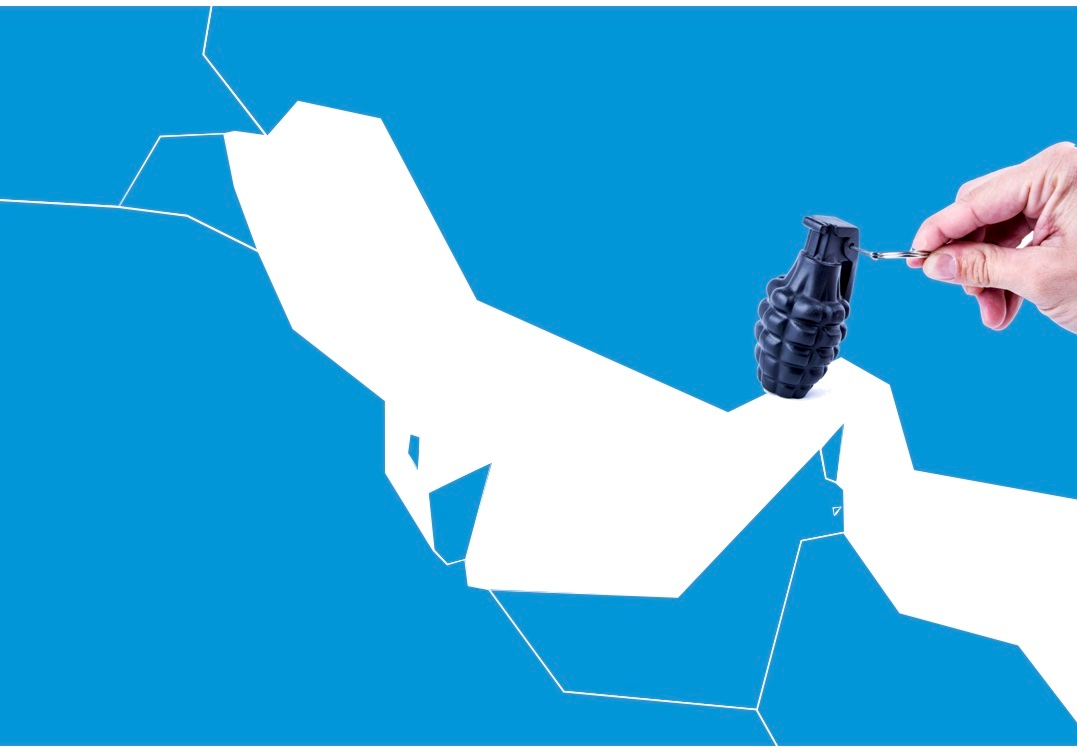
Oil matters. But focusing only on oil through this crisis is an error of omission.
The Strait of Hormuz carries about a fifth of the world’s oil, everyone knows that. But other commodities traverse that strait. And right now, they aren’t traversing. End the disruption tomorrow and the commodity supply consequences will still take months and years to resolve.
Every couple of days, Trump tells us there is a deal with Iran coming to re-open Hormuz. It’s the Art of the Tease, I suppose. The Strait of Hormuz has been a global economic disaster waiting to happen for 50 years. The region has been mired in conflict for, well, forever. Even if Trump pulls off a happy resolution this time, Hormuz will remain a ticking time bomb for our lives and the lives of our children.
The Strait of Hormuz is Iran’s non-nuclear trump card.
So let’s look at the other stuff that floats through that 21-mile-wide waterway.
Sulfur: the byproduct that became a chokepoint
Roughly a fifth of total global sulfur production sails through Hormuz. Sulfur is the precursor to sulfuric acid, and sulfuric acid is the precursor to phosphate fertilizer, battery-grade nickel and cobalt, uranium, and a long list of mining outputs and industrial chemistry production no one thinks about until it stops working.
Sulfur prices have nearly tripled since January.
Damn.
This price spike personally ticks me off because I spray sulfur on our grape vines to keep powdery mildew under control. Crisis Investing principles apply to the vineyard as well as the portfolio: buy the input before the input buys you. I bought enough to keep me and my clothes smelling like rotten eggs long after the stink of the midterm elections subsides.
Speculators profit from economic disruptions caused by political shenanigans. But seeing how to play this sulfur disruption requires some deep research. We just provided a sulfur-focused issue of Crisis Investing to our paid subscribers with a recommendation as to how to profit from the disruption.
Methanol: plastics, paints, and pretty much everything
Iran exports ten million tons of methanol a year. At least it used to. Add Saudi, Qatari, and Bahraini volumes and you have about 11 percent of total global methanol production routed through Hormuz.
China makes more than half the world’s methanol from coal, yet the country is still a net importer. Methanol is the upstream input to formaldehyde, acetic acid, MTBE, and a large fraction of the world’s plastics, resins, and synthetic fibers.
Methanol spot prices have nearly doubled in Asia and more than doubled in Europe since January. When methanol prices increase, the cost of everything from your kitchen counter to your car’s interior trim eventually follows. The lag is six to twelve months. Pay attention to the input contracts now. The consumer price effect follows later.
Damn.
Fertilizer
About a third of the world’s traded fertilizer moves through Hormuz. For urea — the workhorse nitrogen fertilizer that grows the corn, wheat, and rice the planet eats — Hormuz handles 45 to 50 percent of the export trade. That works out to about 13 percent of total global urea production trying to flow through the Persian Gulf’s inflamed prostate.
Qatar’s QAFCO operates the single largest urea facility on Earth. It has been offline since Iranian drones struck Ras Laffan on March 2 — followed by a ballistic missile attack two weeks later that damaged two LNG trains.
Urea prices have moved from $483 per ton on February 27 to over $850 by mid-April, with India’s panic-buying tender on April 15 clearing 2.5 million tons at $950 per ton. Prices eased somewhat in May but remain well above pre-war levels across most regions. China — the only real swing supplier — restricted its own urea exports to protect its domestic farmers. So the planet’s two largest sources of nitrogen fertilizer trade are simultaneously off the global market during the Northern Hemisphere planting season.
Damn.
Helium
Qatar produces a third of the world’s helium as a byproduct of liquefying natural gas at Ras Laffan. The same Ras Laffan that took the Iranian strikes. QatarEnergy’s CEO has said repairs will take three to five years.
With LNG production shut since March 2, roughly a third of total global helium supply went offline. Stranded transport containers have been steadily bleeding helium for three months — liquid helium boils off at up to 1 percent per day in transit.
There is no substitute for helium for cryogenic semiconductor manufacturing or MRI machines. South Korea sourced sixty-five percent of its helium from Qatar. Taiwan, sixty-nine percent. Samsung, SK Hynix, and TSMC are rationing. Spot prices have already tripled. Forecasts put them at seven times pre-war levels if the disruption stretches.
Every MRI machine depends on liquid helium to keep its superconducting magnet cold. Medical costs will rise. Semiconductor fabrication depends on helium for cooling and processing. The AI capex boom that Wall Street has been pricing as a perpetual motion machine depends on a gas sucked out of a single facility in the Persian Gulf. We’ll come back to helium in a separate letter — there’s an investment opportunity here.
Aluminum and steel: turns out that cars, trains … and roofs … aren’t built out of silicon.
Gulf states produce about 21 percent of the world’s aluminum. Emirates Global and Bahrain’s Alba run on Gulf gas and ship through Hormuz. A blocked Strait also blocks high-grade iron ore pellets and direct-reduced iron — the feedstocks for electric-arc furnaces that supply much of the world’s structural steel.
As the Iran war started, I rushed an order for the metal roof for my house at the suggestion of the company I hired to do the job. The roofer guys knew that metal prices were headed up and advised me well. Tradesmen and those who use commodity-based materials are intimately aware of the real-world effects of global insanity. We should pay heed to them.
The Straitjacket.
Globalization kinda stupidly assumed the chokepoints would stay open because the alternative was unthinkable. And yet we all knew this could happen. It’s not as if Iran’s leaders have been paragons of sanity. But who expected the US government leaders would pull the pin on the grenade?
The fertilizer for next year’s harvest is sitting in port. The helium for next year’s chips is evaporating in stranded containers. The aluminum for next year’s construction is still in Bahrain.
In a subsequent letter, we’ll get into who wins and who loses. The analysis leads to some unexpected and interesting conclusions. Crises are also opportunities, and we will start digging into those.
In the meantime, please do me a favor: forward this email on to whoever you think can benefit from understanding a bit more about economics—both global and personal. Start with your children. Please help us connect with them. Advise them to subscribe. Don’t let the unsound mainstream news and ridiculous social media dimwits serve as their source of information.
Oh, and another thing. The Strait of Hormuz isn’t the only chokepoint strait on the planet. Several others exist. That’s one of about a zillion reasons why peace is so damn important … and why a Crisis Investing mentality makes so much sense.
Sincerely,
John Hunt, MD
P.S. This supply restriction doesn’t increase inflation. But it increases prices. At Crisis Investing, we don’t conflate inflation with price levels. Rather we strive to think clearly, with integrity, with soundness. We don’t think in terms of Keynesian economic hogwash, because it is indeed hogwash.
Inflation is expansion of the money supply. Prices are affected by monetary expansion, but are also separately and independently affected by supply/demand dynamics. This is a core economic concept that, if understood, helps provide a secure foundation for sound economic thinking. Help your family overcome the constant barrage of Keynesian hogwash by sending them content that informs them while also inoculating them against the collectivist contagion. Please do forward this email on and ask them to subscribe.
Here is more proof that the Hormuz Deal-No Deal ping pong game is just a scam act.
DJT has his orders from Israeli headquarters to NOT make any deal with Iran.
https://www.globalresearch.ca/ben-gvir-israel-not-allow-trump-peace-deal-iran/5928318
Also, there is this piece of treason being hidden from public as another straitjacket being perpetrated.
https://www.zerohedge.com/military/congress-quietly-moves-intertwine-us-israeli-militaries-formal-level
For powdery mildew alternative try baking soda spray. They can collect sulfuric gases vapors that result from mineral coal combustion btw.