

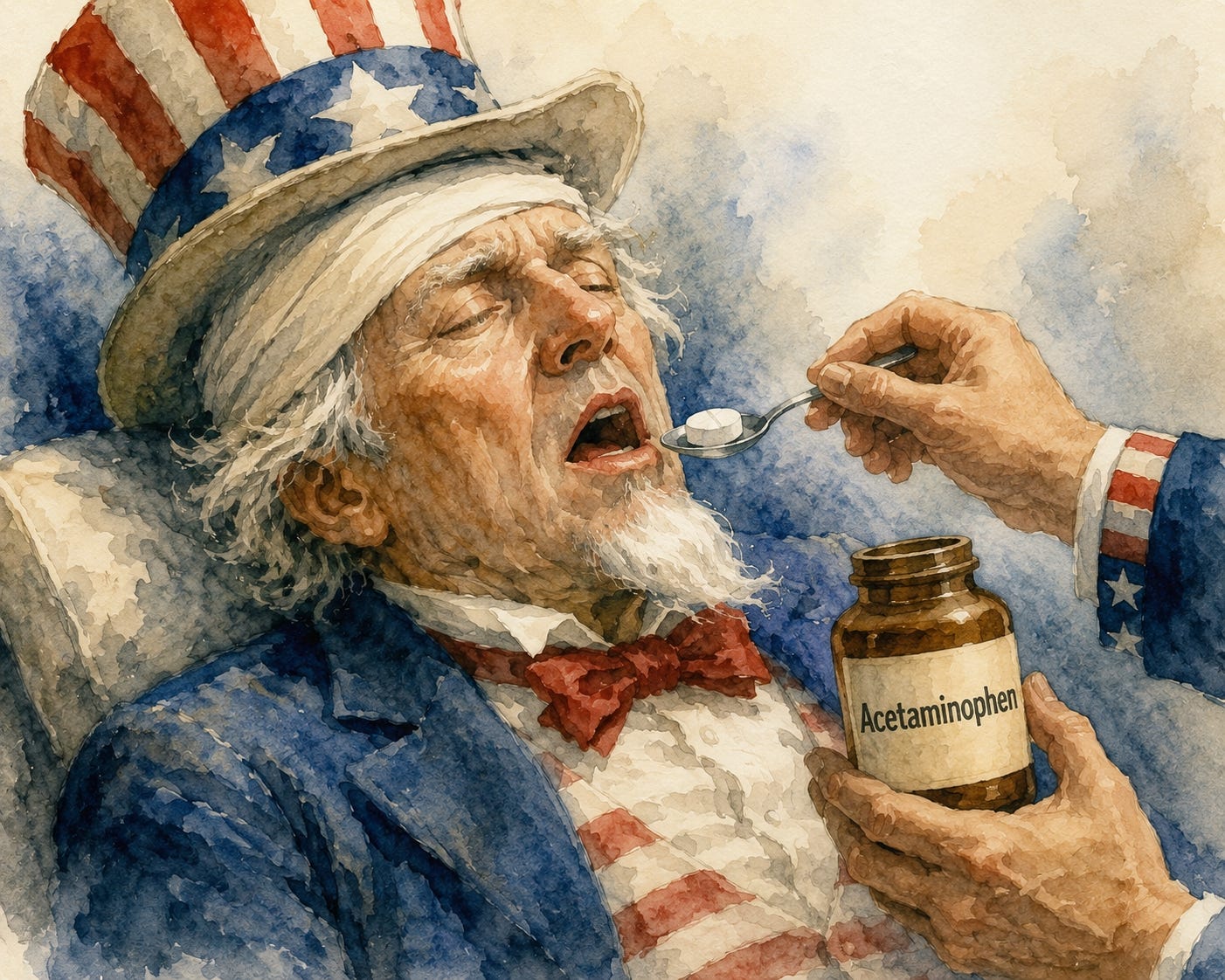
Last week, the U.S. Treasury Department announced it would double up the buy back of its own debt. What the heck does that mean?
What happened this month
Over the past several weeks, the interest rate on the government’s longest-term IOUs — the 30-year bond — climbed to its highest level in nearly two decades. Investors are demanding more interest before they agree to lend the government money for 30 years.
Personally, I think it is wrong and a bit crazy to loan money to an entity such as a government—an entity that would be bankrupt but for the sad fact that it can service its debts by forcibly taking the fruits of the labors of people, or by counterfeiting the currency.
But for those who—because of laws that demand it (such as pension funds etc.) or whatever other reasons—keep loaning money to the bums, we can all understand why they would demand higher returns.
On August 19, 2026, Treasury stepped in to do a little something. It isn’t doing anything particularly dramatic. It isn’t running a last-ditch effort to avoid an impending debt collapse. It isn’t signaling impending calamity.
It announced that it would at least double the maximum size of certain buyback operations. These are programs where it takes on some new debt to buy some of its own older IOUs before they’re due. And they have a reason for wanting to do this.
What’s the size of it? Pretty damn small on a scale that amounts to $2 trillion of Treasury paper planned to be rolled over in the coming quarter. All told it amounts to an increase of perhaps $16 billion over the next couple of months. This is not $16 billion of new deficit spending. It’s $16 billion of old, long-dated debt being retired earlier than its maturity would demand, and refinanced with new, short-term debt.
Why and how does the government buy back its own debt before maturity?
Some older bonds, especially long-dated ones issued years ago, become “off-the-run.” This means they are thinly traded, with few buyers or sellers active at any given moment. That relative lack of liquidity can cause some price extremes when those bonds are traded. It’s a bit of a headache.
The media is incentivized to make loud noises about extremes. And given that the markets are walking a tightrope, the Trump administration doesn’t want that market spooked with loud noises.
Treasury is still issuing plenty of new IOUs every week, mostly short-term ones, to fund the government day to day. A little bit bigger slice of that borrowed cash will be set aside to retire old, hard-to-trade treasury debt. Treasury holds a mini-auction to buy some of those old IOUs back. Using an electronic trading system called FedTrade (run on Treasury’s behalf by the Federal Reserve Bank of New York), bond dealers submit offers to sell old bonds to the government. Treasury picks the best-priced offers, up to that session’s dollar limit, and pays cash for those bonds, retiring them.
Basically, a chunk of older, illiquid paper is swapped out for smoother-functioning new paper.
Treasury is reshuffling a sliver of its pile of debt to keep a thin corner of the market trading. It is not (in this case) launching a rescue operation and it is not creating new money. Statists and central bank types would describe this as competent and prophylactic fine tuning of the US government debt markets.
Treasury has run this program since 2024, and under the schedule published August 5, operations happen roughly once a week to every ten days, rotating through different maturity buckets: short-term notes, the 10-to-20-year bucket, the 20-to-30-year bucket, and Treasury Inflation-Protected Securities (TIPS).
Does it actually fix anything?
The buyback can make trading smoother and may push yields lower temporarily, and of course it adds a bit to the bottom lines of Goldman Sachs, JP Morgan, Morgan Stanley and the other primary dealers. What it doesn’t do is address the fundamental forces putting upward pressure on long-term yields.
- The government keeps running large deficits and keeps issuing more debt to cover them
- The expansion of the money supply is expected to keep diluting the value of the dollar.
In other words, the total supply of bonds investors are asked to absorb keeps growing, and the interest rate needed to compensate for expected inflation needs to be higher.
The buy-backs do precisely zilch to resolve the deficits and the currency inflation.
Treasury is not doing anything to fix the cause of the problem. That’s Congress’s job.
Three metaphors
Treasury is accomplishing a small plumbing fix. It is unclogging one small pipe that is making it harder for the government’s sewage to flush.
The markets are walking a tightrope and Treasury doesn’t want them spooked.
Treasury is giving us Tylenol for a brain tumor.
Take your pick how to describe this Treasury undertaking.
What Treasury is not doing is stopping the government from overflowing the toilet caused by its devouring and then excreting America. It is not getting us safely off a tightrope and onto solid ground. It is not excising the brain tumor that is the cause of the headache.
And it would be wrong and a bit crazy to think that they ever will.
Sincerely,
John Hunt, MD
Editor, Doug Casey’s Crisis Investing
"What Treasury is not doing is stopping the government from overflowing the toilet caused by its devouring and then excreting America." That's the best line I have heard in a long time, very good Doc!
Jim Marshall
Is it leaving anyone else curious (suspicious for me) to see every crypto out there fly to the moon? Even fartcoin is kicking ass. Do you think people that invest in fartcoin care about Yield Control Curves? Distract from Gold maybe?
Speaking of which fartcoin has a 183M market cap. My next question is am I the only person offended by this? It feels like a taunt. It’s like they are calling us stupid; a total slap in the face.
Sorry am worked up maybe I am seeing it wrongly.